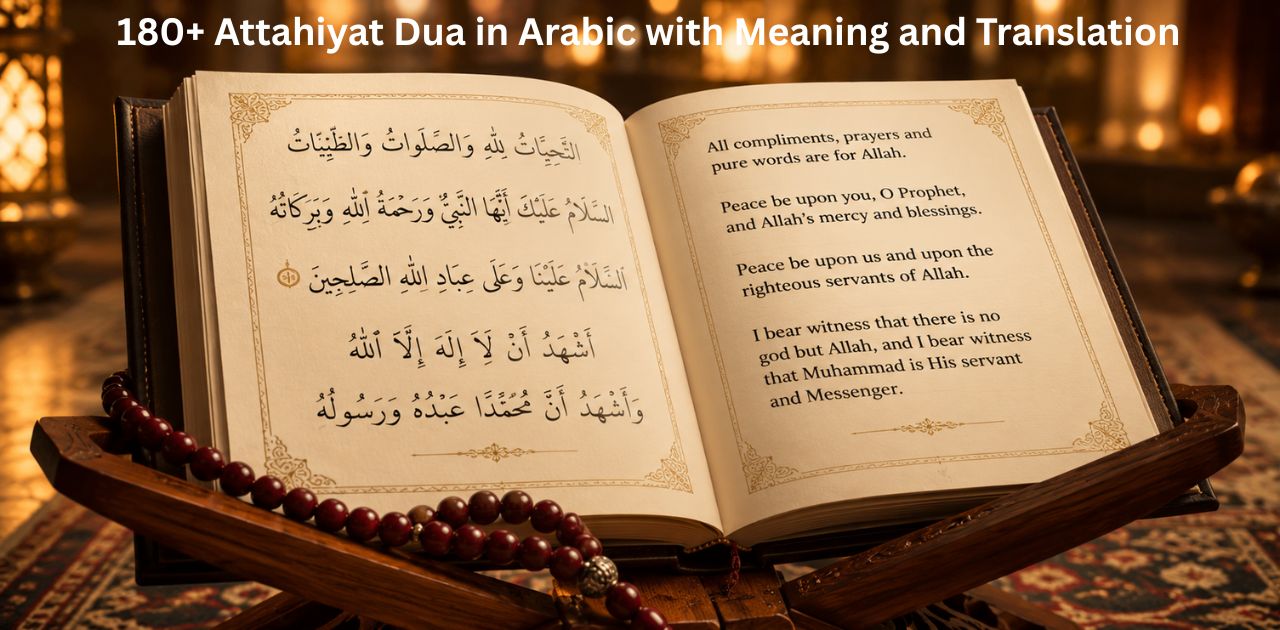

Attahiyat in English for easy recitation is a simplified way to understand the Attahiyat dua. which is an essential part of Salah (Namaz) recited during the sitting position of prayer known as Tashahhud. It helps Muslims, especially beginners and non-Arabic speakers , connect with the meaning of their Islamic prayer without difficulty.
This translation allows worshippers to understand the words of respect, blessings, and testimony of faith offered to Allah during Salah. Learning it in English improves focus, pronunciation awareness, and spiritual connection. It also supports better understanding of Tashahhud, Arabic recitation, Islamic worship, English me
Attahiyat Dua in Arabic Text
التَّحِيَّاتُ لِلَّهِ وَالصَّلَوَاتُ وَالطَّيِّبَاتُ
السَّلَامُ عَلَيْكَ أَيُّهَا النَّبِيُّ وَرَحْمَةُ اللَّهِ وَبَرَكَاتُهُ
السَّلَامُ عَلَيْنَا وَعَلَىٰ عِبَادِ اللَّهِ الصَّالِحِينَ
أَشْهَدُ أَنْ لَا إِلَٰهَ إِلَّا اللَّهُ وَأَشْهَدُ أَنَّ مُحَمَّدًا عَبْدُهُ وَرَسُولُهُ
Attahiyat dua in Arabic text is an essential part of Salah that Muslims recite in Tashahhud. Learning the exact Arabic form helps improve accuracy, pronunciation, and spiritual connection during daily Islamic prayer practice.
- Attahiyat Arabic text is recited in sitting position during Tashahhud of Salah worship daily
- It represents greeting, respect, and submission to Allah in Islamic prayer structure clearly
- Proper Arabic recitation improves Tajweed and pronunciation accuracy in Salah for Muslims worldwide
- Muslims study the Arabic text of Attahiyat to perform the five daily prayers correctly and with proper understanding
- It is taught in Hadith from Ibn Mas’ud (RA) describing Tashahhud wording clearly
- Arabic Attahiyat strengthens spiritual focus during prayer sitting position before Tasleem ending Salah
- It links believers to the Sunnah of Prophet Muhammad ﷺ, guiding them in authentic Islamic acts of worship and practice
- Learning Arabic text helps beginners build strong foundation in Namaz recitation guide easily
- Attahiyat Arabic form remains unchanged across all Muslim communities maintaining unity in prayer
- Correct Arabic reading enhances understanding of Islamic worship and improves Salah discipline consistently
Attahiyat dua in Arabic text is a vital part of Islamic prayer that ensures correctness and devotion. Learning it properly helps Muslims perform Salah with confidence, clarity, and deeper spiritual understanding of worship.
Attahiyat Dua with Meaning and Translation
Attahiyat dua with meaning and translation helps Muslims understand the spiritual message behind the Arabic words. It makes Salah more meaningful by connecting worship with understanding, reflection, and emotional awareness.
- English meaning of Attahiyat explains greetings, blessings, and testimony of faith in prayer clearly
- Translation helps non Arabic speakers understand Islamic prayer explanation in simple language
- Attahiyat meaning in English builds deeper connection with Allah during Salah recitation practice
- It includes respect for Allah, Prophet Muhammad ﷺ, and righteous servants in Islam clearly
- Urdu translation of Attahiyat supports learners in South Asia for better daily understanding
- English meaning improves focus and mindfulness during Islamic worship and prayer sitting position
- Transliteration guide helps beginners connect Arabic text with pronunciation and meaning together
- Translation strengthens emotional benefits of Salah by making words understandable and relatable
- It enhances Islamic worship experience by combining language learning with spiritual devotion
- Attahiyat meaning increases awareness of Tawheed and submission to Allah in prayer
Attahiyat dua with meaning and translation helps believers connect deeply with their Salah. It transforms recitation into understanding, making prayer more meaningful, emotional, and spiritually powerful for Muslims everywhere.
Attahiyat in English for Easy Recitation
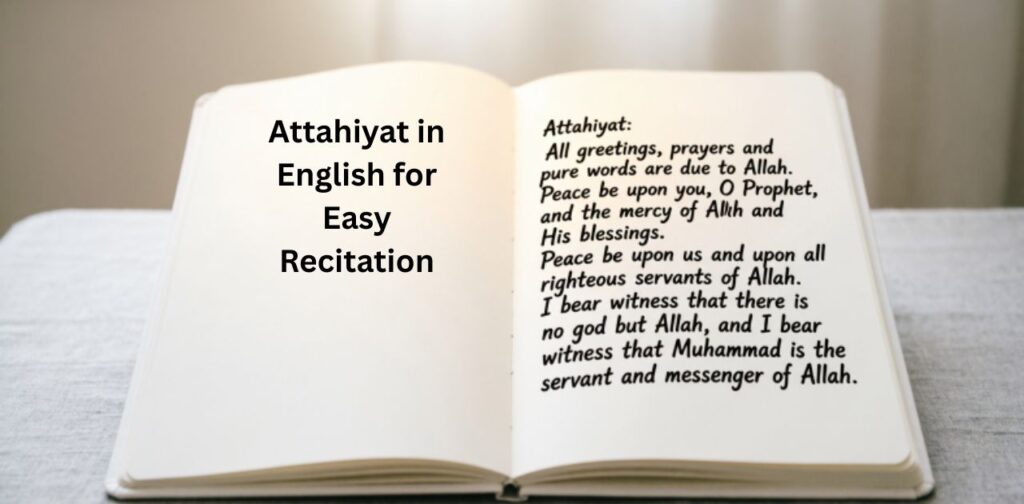
All compliments, prayers and pure words are for Allah.
Peace and blessings be upon you, O Prophet, along with Allah’s mercy.
May peace be upon us and upon all the righteous servants of Allah.
I testify that there is no deity except Allah, and I testify that Muhammad is His servant and Messenger.
Attahiyat in English for easy recitation helps beginners understand and memorize the prayer quickly. It makes Salah simpler for non-Arabic speakers, especially those learning Islamic prayer and improving their understanding of Salah.
- Attahiyat English version helps beginners understand meaning of Tashahhud in simple language easily
- It supports non Arabic speakers in learning Islamic prayer without confusion or difficulty
- English recitation improves understanding of Salah steps and strengthens spiritual connection during praye
- Helps learners memorize Attahiyat dua faster using familiar English words and phrases clearly
- Useful for kids and new Muslims learning Five daily prayers step by step
- English Attahiyat improves confidence during Salah for those struggling with Arabic pronunciation
- It bridges gap between Arabic text and understanding of Islamic worship practice
- Supports prayer guide for beginners to follow Namaz recitation easily and correctly
- Helps understand Prophet Muhammad ﷺ teachings related to Tashahhud and prayer structure
- English translation makes Islamic prayer more accessible for global Muslim community learning
Attahiyat in English for easy recitation helps simplify Islamic learning for beginners. It enhances understanding, builds confidence, and makes Salah more meaningful for those who are still learning the Arabic words of prayer.
Importance of Attahiyat in Salah
Attahiyat dua is a key part of Islamic prayer that brings meaning, focus, and spiritual depth to Salah. It helps Muslims connect with Allah and understand the essence of worship in daily life.
- Attahiyat strengthens Islamic prayer connection with Allah during Tashahhud sitting position in Salah worship
- It is an essential part of Salah ensuring proper completion of prayer according to Islamic teachings
- Reciting Attahiyat improves focus and mindfulness during Islamic prayer reducing distractions in worship moments
- It reminds believers of Prophet Muhammad ﷺ and the importance of following his Sunnah daily
- Attahiyat enhances emotional and spiritual awareness during Salah making worship more meaningful and heartfelt experience
- It is part of Pillars of Salah structure ensuring correct prayer performance in Islam
- Reciting Attahiyat brings peace and calmness to heart during daily Islamic worship routine consistently
- It helps Muslims reflect on Tawheed and submission to Allah during prayer sitting position deeply
- Attahiyat helps deepen the understanding of Tashahhud and strengthens a Muslim’s connection with the steps of Salah in Islamic practice
- It supports proper Islamic worship discipline and builds consistency in Five daily prayers routine
Attahiyat holds great importance of Attahiyat in Salah as it completes the worship cycle. It deepens faith, strengthens devotion, and helps believers stay focused and spiritually connected with Allah in every prayer.
Obligation of Attahiyat in Salah (Farz / Wajib Aspect)
Attahiyat is an important part of Salah that scholars discuss under Wajib or essential practice. Understanding its ruling helps Muslims perform prayer correctly and avoid mistakes in daily Islamic worship.
- Attahiyat is considered Wajib in many Islamic schools of thought during Salah recitation practice
- Missing Attahiyat intentionally may affect validity of prayer according to Islamic jurisprudence guidelines
- It is recited in second rak’ah and final rak’ah of Salah sitting position carefully
- Scholars reference Hadith from Ibn Mas’ud (RA) explaining Tashahhud importance in prayer structure
- Attahiyat ensures proper completion of Salah according to Sunnah of Prophet Muhammad ﷺ teachings
- It is part of essential prayer sequence including Ruku and Sujood stages in Islam
- Islamic scholars emphasize correct recitation of Attahiyat in Arabic text with Tajweed rules
- It is necessary for maintaining discipline in Five daily prayers and Islamic worship system
- Attahiyat supports correct flow of Salah steps including Qiyam and final Tasleem ending
- Understanding obligation helps Muslims perform Salah with confidence and avoid errors in worship
Attahiyat plays an important Obligation of Attahiyat in Salah (Farz / Wajib Aspect) role in Islamic prayer. It ensures correctness, discipline, and spiritual validity, helping believers maintain proper connection with Allah.
Hadith Evidence of Tashahhud in Prayer
Hadith evidence confirms the importance of Attahiyat and Tashahhud in Islamic prayer. These narrations guide Muslims on how Prophet Muhammad ﷺ taught prayer structure and recitation.
- A hadith in Sahih Muslim clearly reports that the Prophet Muhammad ﷺ taught the Tashahhud to his companions in an explicit and detailed manner
- Ibn Mas’ud (RA) narrated authentic Attahiyat wording used in Salah recitation practice daily
- Sunan Abu Dawood includes guidance on correct Tashahhud recitation during sitting position in prayer
- Hadith emphasizes sending Salawat after Attahiyat in final rak’ah of Salah worship
- The Prophet Muhammad ﷺ demonstrated the Tashahhud during the Isra and Mi’raj, highlighting its deep spiritual significance
- Islamic scholars rely on Hadith to explain importance of Attahiyat in Salah structure
- Tashahhud Hadith highlights respect and greetings to Allah and righteous servants in prayer
- Authentic narrations confirm raising finger during Attahiyat recitation as Sunnah practice in Islam
- Hadith supports correct pronunciation and Arabic recitation of Attahiyat dua in Salah
- These narrations strengthen understanding of Islamic prayer and worship discipline for Muslims globally
Hadith evidence clearly shows the importance of Attahiyat in Salah. It guides Muslims in correct recitation and practice, ensuring prayer follows Sunnah and strengthens spiritual connection with Allah
Attahiyat Dua in First and Final Tashahhud
Attahiyat is recited in both the first and the final Tashahhud during Salah. Understanding the difference helps Muslims perform prayer correctly according to Islamic teachings and Sunnah practice.
- First Tashahhud occurs after second rak’ah in multi rak’ah Salah prayers structure
- Final Tashahhud is recited before Tasleem ending Salah in complete prayer form
- Both include Attahiyat Arabic text recitation in sitting position of Salah worship
- First Tashahhud is shorter while final includes Salawat Ibrahimiyah and additional supplication
- Prophet Muhammad ﷺ taught both forms during Salah practice to companions clearly
- Understanding difference helps avoid mistakes in Islamic prayer steps and recitation order
- Final Tashahhud carries greater spiritual reward and importance in Salah completion process
- Both forms strengthen connection with Allah during Islamic worship and daily prayers
- Correct recitation improves focus and discipline in Five daily prayers routine consistently
- Scholars explain both are essential parts of proper Salah performance in Islam teachings
Attahiyat in first and final Tashahhud ensures correct Salah structure. It helps Muslims maintain proper worship sequence, strengthen faith, and complete prayer according to Sunnah of Prophet Muhammad ﷺ.
Conditions and Rules of Reciting Attahiyat in Salah
Reciting Attahiyat requires proper rules and conditions in Salah. Understanding them helps Muslims perform prayer correctly, ensuring acceptance and alignment with Islamic teachings and Sunnah.
- Attahiyat must be recited in sitting position during Tashahhud stage of Salah prayer
- Proper Arabic pronunciation with Tajweed ensures correct recitation of Attahiyat dua in worship
- Facing Qibla direction is necessary while reciting Attahiyat in Islamic prayer practice
- It should be recited calmly without rushing during second or final rak’ah sitting
- Learning correct Makhraj improves pronunciation accuracy of Arabic Attahiyat text in Salah
- Intention (Niyyah) must be clear before starting Salah including Attahiyat recitation properly
- Women and men both must follow same rules of Attahiyat recitation in prayer
- It is recited after Sujood and before Tasleem in final stages of Salah
- Understanding rules helps avoid mistakes in Islamic worship and prayer acceptance process
- Scholars emphasize consistency in Attahiyat recitation for valid and complete Salah performance
Attahiyat conditions ensure correct Salah practice. Following rules improves worship quality, strengthens discipline, and helps Muslims perform prayer in the proper Islamic way with full focus and devotion.
Importance of Sending Salawat in Attahiyat
Sending Salawat in Attahiyat is a beautiful part of Salah that increases blessings and spiritual reward. It strengthens love for Prophet Muhammad ﷺ and enhances worship experience.
- Salawat Ibrahimiyah is recited after Attahiyat in final Tashahhud of Salah prayer
- It sends blessings upon Prophet Muhammad ﷺ and Prophet Ibrahim (AS) family
- Reciting Salawat brings increased blessings from Allah and serves as a means of forgiveness for believers in Islam
- It strengthens emotional connection with Prophet Muhammad ﷺ during prayer sitting position
- Hadith explains high reward for sending Salawat in daily Islamic prayers consistently
- It is part of Sunnah taught by Prophet Muhammad ﷺ to companions clearly
- Salawat enhances spiritual peace and calmness during Salah recitation and reflection moments
- It improves understanding of Islamic worship and love for Prophet ﷺ teachings
- Sending Salawat brings greater blessings from Allah and is a source of forgiveness for believers in Islam
- It completes Attahiyat dua with deeper meaning and spiritual connection to faith
Sending Salawat in Attahiyat brings immense blessings. It strengthens faith, enhances prayer reward, and builds a deep emotional connection with Prophet Muhammad ﷺ and Islamic teachings.
Rewards and Benefits of Reciting Attahiyat in Prayer
Reciting Attahiyat in Salah brings many spiritual and emotional benefits. It strengthens faith, improves focus, and helps Muslims connect deeply with Allah during daily worship.
- Attahiyat increases spiritual connection with Allah during Salah recitation and prayer moments
- It brings peace and calmness to heart during Islamic worship and reflection time
- Reciting Attahiyat improves focus and mindfulness in Five daily prayers consistently daily
- It strengthens understanding of Tashahhud and Islamic prayer structure for believers worldwide
- Attahiyat dua helps Muslims feel closer to Prophet Muhammad ﷺ teachings and Sunnah
- It enhances emotional stability and reduces stress during Islamic worship practice regularly
- According to Hadith teachings, recitation brings forgiveness and reward as part of Islamic guidance
- It builds discipline and consistency in performing Salah correctly every single day
- Attahiyat strengthens belief in Tawheed and submission to Allah during prayer sitting
- It improves overall spiritual awareness and Islamic worship experience for all Muslims
Attahiyat offers great rewards and benefits in Salah. It strengthens faith, enhances peace, and helps believers maintain strong spiritual connection with Allah through consistent prayer practice.
Read More: 86+ Dua e Masura in Hindi with Meaning | Authentic Islamic Duas
When Should You Raise Your Finger During the Tashahhud?
Raising the finger during Tashahhud is a Sunnah practice in Salah. It helps focus, symbolizes Tawheed, and follows the teaching of Prophet Muhammad ﷺ.
- Index finger is raised during Attahiyat recitation in sitting position of Salah prayer
- It is raised when saying testimony of faith in Tashahhud clearly and respectfully
- Prophet Muhammad ﷺ demonstrated finger raising during Salah practice for companions guidance
- Finger movement symbolizes belief in one Allah and rejection of shirk in Islam
- It is kept steady or moved slightly according to Islamic scholarly opinions carefully
- Raising finger increases focus and concentration during prayer recitation and reflection moments
- It is performed in both first and final Tashahhud sitting positions in Salah
- Correct timing enhances Sunnah practice and improves understanding of Islamic worship rules
- Scholars explain it as symbol of Tawheed and spiritual submission to Allah Almighty
- It strengthens awareness and mindfulness during Islamic prayer and daily worship routine
Raising a finger during Tashahhud is an important Sunnah. It enhances focus, symbolizes faith in Allah, and helps Muslims follow Prophet Muhammad ﷺ example in Salah correctly.
Transliteration Of Attahyat
Attahiyat transliteration helps Muslims read Arabic words easily in Latin script. It supports beginners in learning Salah and improves pronunciation before mastering Arabic text.
- Attahiyat transliteration guide helps beginners learn Arabic recitation of prayer easily today
- It supports correct pronunciation of Tashahhud words during Salah without confusion or mistakes
- Transliteration of Attahiyat dua improves memorization for non Arabic speaking Muslims globally
- It acts as bridge between Arabic text and English understanding for learners
- Helps Muslims practice Islamic prayer steps accurately before learning full Arabic script
- Improves fluency in Salah recitation and builds confidence during daily worship routine
- Transliteration guide is useful for beginners learning Namaz recitation guide step by step
- It helps understand Attahiyat meaning in English while practicing pronunciation simultaneously together
- Supports better understanding of Islamic worship and prayer connection with Allah Almighty
- It is widely used in prayer guide for beginners across and worldwide
Attahiyat transliteration makes learning easier for beginners. It improves pronunciation, understanding, and confidence, helping Muslims perform Salah correctly while gradually mastering Arabic recitation and Islamic worship practice.
FAQs
What is Attahiyat dua in English for easy recitation?
Attahiyat in English for easy recitation is a translated form of the Attahiyat dua that helps beginners understand Salah easily. It makes the meaning of Tashahhud simple for non-Arabic speakers.
Why is Attahiyat dua important in Salah?
It is an essential part of Salah (Namaz) that shows respect and submission to Allah. It is recited in the sitting position during Tashahhud.
Can I learn Attahiyat without Arabic?
Yes, learning it in English helps beginners understand the meaning first. Later, they can improve Arabic recitation and pronunciation.
Is Attahiyat recited in every prayer?
Yes, it is recited in the second and final rak’ah of the five daily prayers. It is a key part of Islamic prayer structure.
Does Attahiyat have spiritual benefits?
Yes, it increases focus, calmness, and connection with Allah. It improves understanding of Islamic worship and strengthens faith.
Conclusion
Attahiyat in English for easy recitation is very helpful for beginners. It makes the Attahiyat dua easier to understand and follow in daily Salah (Namaz). It also supports learners who are trying to improve their Islamic prayer step by step.
When you understand the meaning, your prayer becomes more focused and meaningful. It builds a stronger connection with Allah and helps you improve your Tashahhud recitation with confidence and clarity.

Hi, I’m Tehreem, the creator of *BlessingMood.com*.
I share thoughts, stories, and inspiration about positivity, gratitude, and the beauty of everyday blessings.
My goal is to spread peace and remind everyone that every moment holds something to be thankful for.
